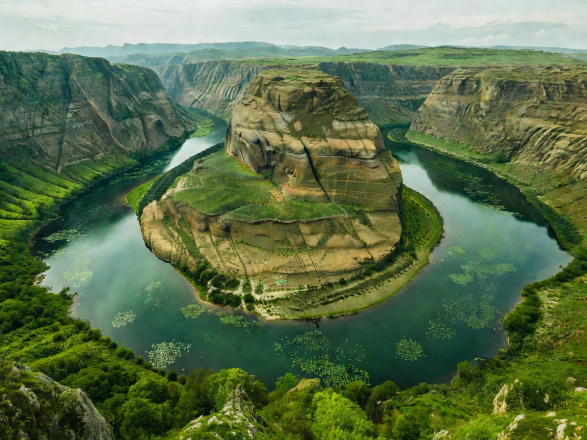
1. The Balkan Amazon: A Cryptodepression Phenomenon
Lake Skadar is a geological cryptodepression: while its surface sits mere meters above the Adriatic, its deepest sub-lacustrine karst springs (known as oka, such as Raduš at 60 meters deep) plunge far below sea level. The famous panorama at Pavlova Strana captures the Rijeka Crnojevića wrapping around a conic karst hill, framed by massive floating carpets of white water lilies (Nymphaea alba) and yellow water-lilies.
2. Avian Biodiversity & The Dalmatian Pelican
As one of Europe's premier ornithological reserves, Lake Skadar supports over 280 bird species. It is one of the final remaining breeding havens for the endangered Dalmatian Pelican (Pelecanus crispus). Through conservation floating platforms in the Pančeva Oka reserve, the nesting population has stabilized, coexisting alongside pygmy cormorants and whiskered terns.
3. Field Navigation via Traditional Čun Craft
To traverse the labyrinthine reed channels without disturbing avian nesting zones, local navigators use the traditional flat-bottomed wooden čun, rowed with long wooden oars. Historic stone monastery islets—including Kom, Starčevo, and Beška—feature 14th-century Cyrillic scriptorial scripts and secluded stone orchards.
Final Sector Monograph
Explore the secluded Venetian stone hamlet of Gornji Stoliv high above Kotor Bay.
Proceed to Gornji Stoliv Dossier →